

DREAM AGAIN
An imaginary world by folzer the shaman

IT ALL BEGINS OVER A DRINK
Folzer is an Italian artist who gathers stories at the counter of a bar or sitting in the corner of a Piazza in his small city in the Appenines.
Many of those stories begin at the bar, during that pleasantly undefined hour when work is over — or we have at least decided to forget about it — and someone orders the first aperitivo.
In the Italy I live in, a bar has always been more than a place to get a drink. It is a small public square, a living room open to everyone, a bonfire around which people gather to talk, observe, laugh, and waste time with the utmost seriousness.
It is in these moments of conviviality that Folzer’s imagination begins to wander.
You can in fact see my work at Viceversa in Miami and Depero in Italy.
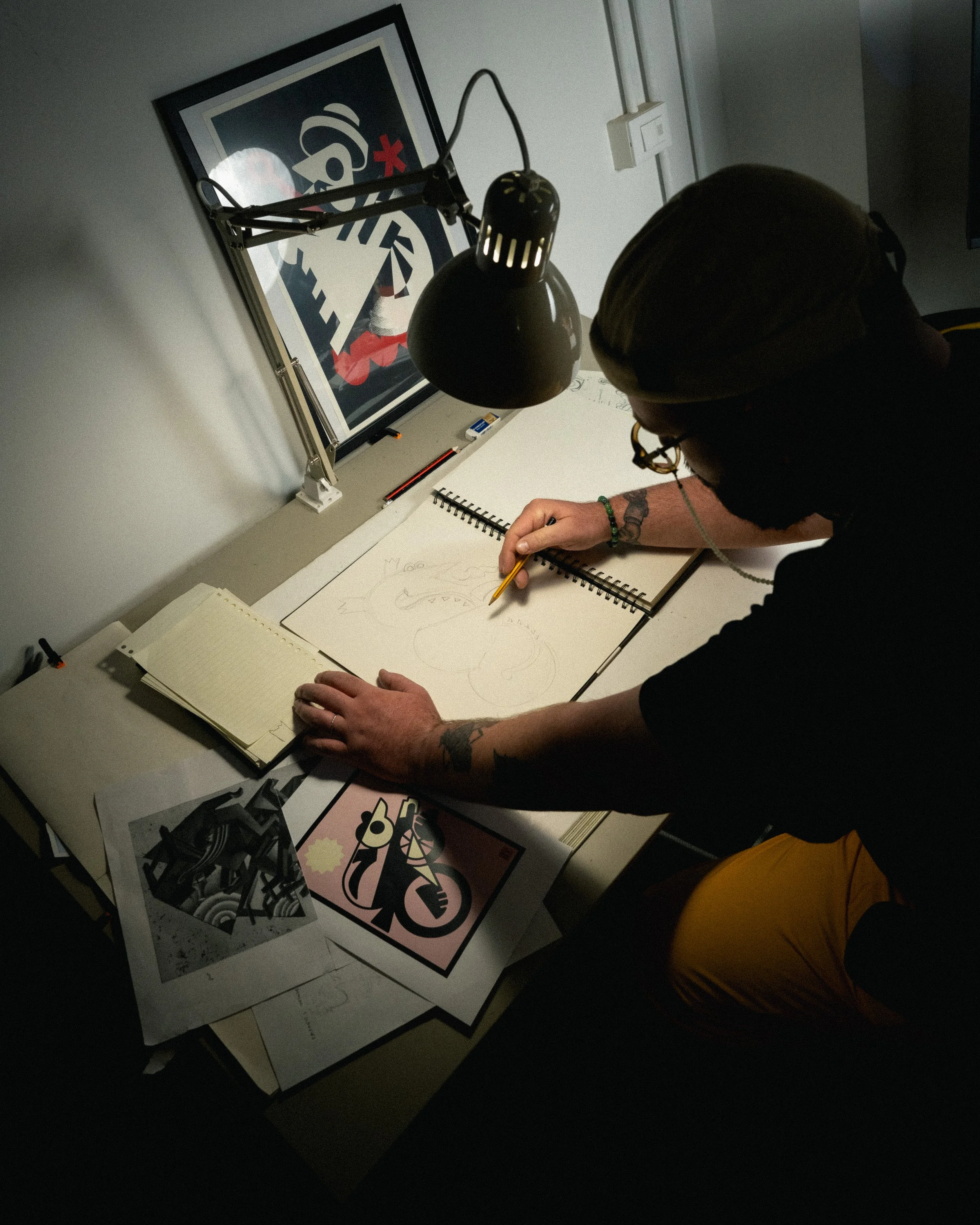
WHEN THE REAL WORLD GETS DISTRACTED
It does not take much: half of an overheard conversation, a character sitting at the far end of the bar, the name of a cocktail, or the memory of a distant city.
Reality provides the beginning of the story. Imagination takes care of the rest.
Animals learn to dress with a certain elegance, drinkers become explorers, and a quiet Italian aperitivo may end up on the other side of the world (perhaps Miami) — or in a place that has never appeared on any map.
Folzer gathers these fragments like a troubadour and, at times, like one of the many shamans sitting around the fire: turning what he sees into stories that are unlikely, but never entirely impossible.
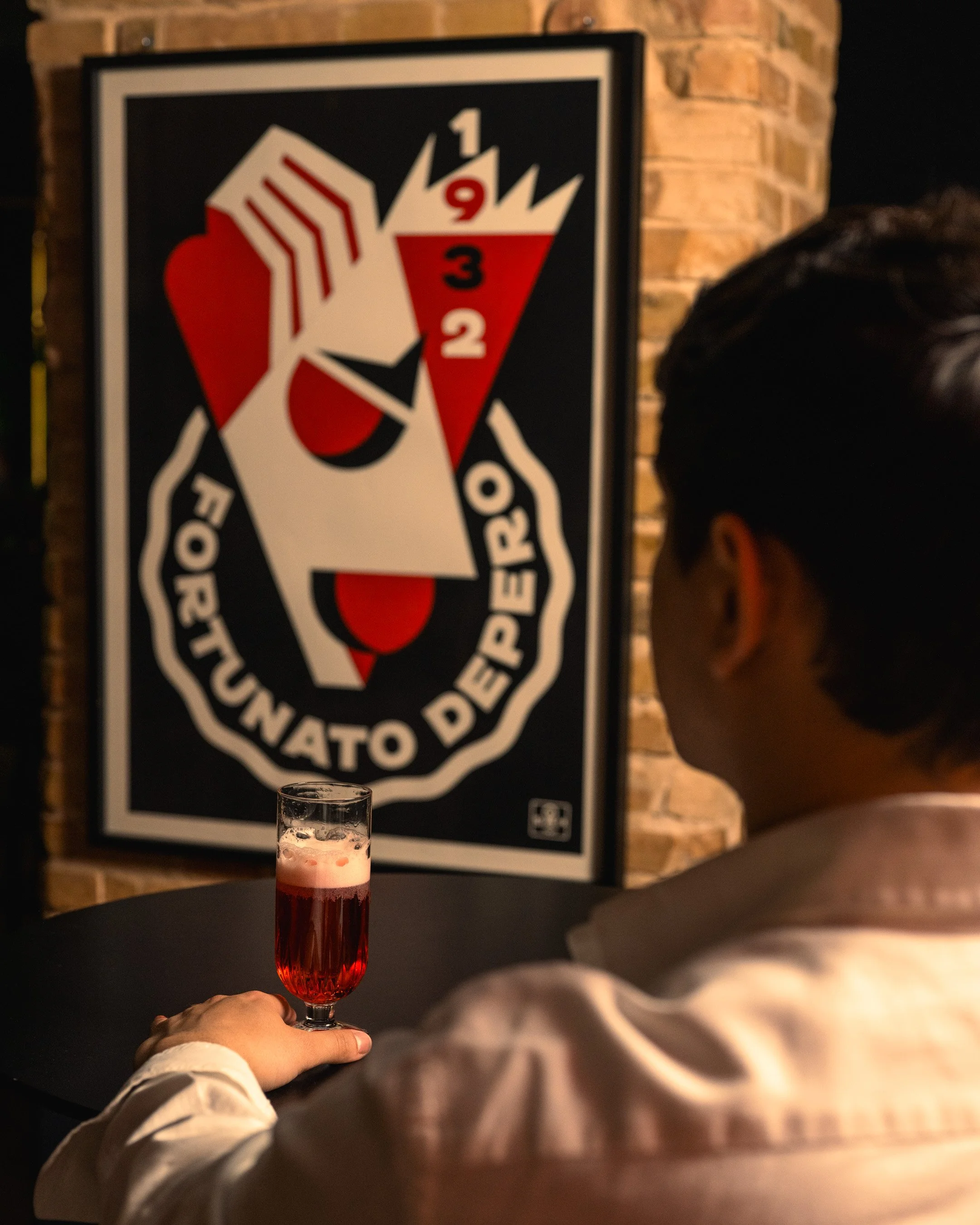
STORIES THAT CONTINUE ON THE WALLS
Every Folzer artwork preserves something of the atmosphere from which it came: the pleasure of conversation, curiosity about others, a sense of humor, and the Italian taste for things made well without taking them too seriously.
Wall art pieces are episodes from a larger world, inhabited by travelers, animals, barroom characters, and creatures rarely encountered before the first drink.
They are made for those who love bars, aperitivo, and stories told without hurry. For those who believe that conviviality is still one of the most intelligent forms of pleasure, and that stepping away from productive life every now and then is necessary if we are to dream again.
"Qual è colui che sognando vede, che dopo ’l sogno la passione impressa rimane, e l’altro a la mente non riede, cotal son io, ché quasi tutta cessa mia visione, e ancor mi distilla nel core il dolce che nacque da essa".
— DANTE ALIGHIERI